
The Most Expensive Mistake You Can Make Before Building a Website Isn't a Design Problem
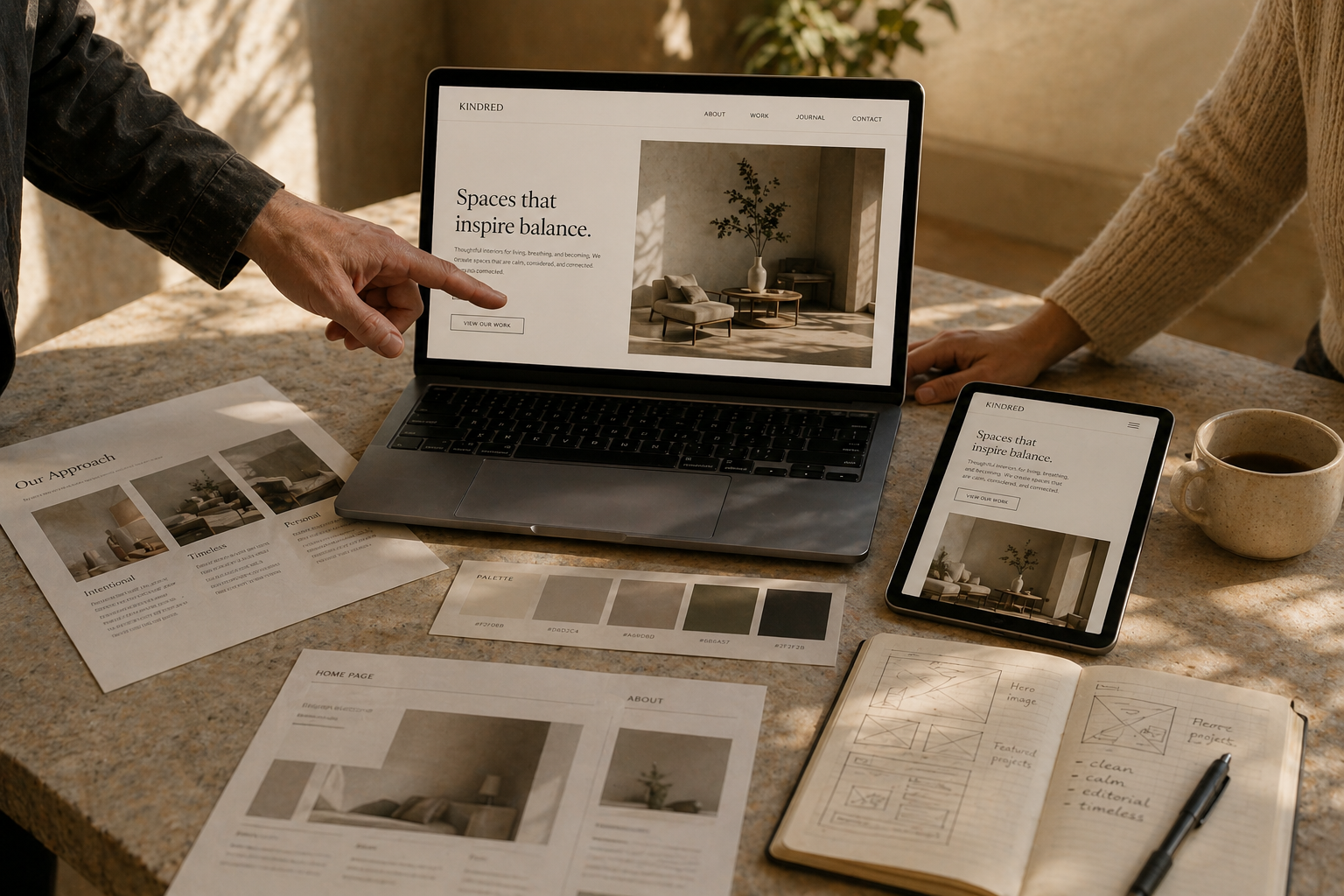
If a website looks professional but isn't generating the right inquiries, attracting the right clients, or reflecting the full quality of the work behind it, the problem is likely not the design.
If you find yourself back at square one, considering a redesign, another investment, another round of hoping the new version solves what the last one didn't — this cycle is expensive. Not just financially, but also in time, in missed opportunities, and in the credibility lost every month a website sends the wrong signals to the right people.
Strategy First
Many businesses come to a website project with a clear vision of what they want it to look like. What's harder to define, and more important, is what it needs to do.
When a business owner decides it's time for a new site, finds a designer, shares some inspiration, answers a questionnaire, and the build begins, the designer works from what they're given — the existing content, the stated goals, the aesthetic preferences — and produces something that reflects all of it faithfully.
What never gets examined is whether any of it was right to begin with:
Who, exactly, is this website for?
What does each type of visitor need to understand, feel, and do when they arrive?
What is the single most important action the site needs to drive?
How does the messaging speak to the person most likely to become a client, as opposed to the person most likely to browse and leave
What pages are actually necessary, and what content is filling space without serving a purpose?
These questions have nothing to do with color palettes or typography or whether the hero image should be full-bleed. A good designer will ask strategic questions during onboarding — strategic thinking is present in every project I take on; it's baked into how I work. But there's a difference between gathering information to inform a build and conducting a dedicated strategic engagement whose entire purpose is clarity itself, documented, comprehensive, and independent of any design decisions.
What Strategy Actually Looks Like
A dedicated discovery and strategy process does something a design brief can't: it examines the business from the outside in.
It starts with the audience. Not a general description of who the business serves, but a precise definition of each distinct group — what they know when they arrive, what they need to understand before they act, and what would cause them to leave without doing so. Clear audience definition is the difference between a site that speaks to everyone and converts no one, and one that speaks directly to the right person at exactly the right moment.
From there, the process moves into messaging. What is being communicated clearly, and what is being assumed? Where is the language precise and compelling, and where is it vague or generic in ways that quietly undermine credibility?
Then structure. Which pages are essential? What belongs front and center, and what can live deeper in the experience? How does a visitor move through the site from first impression to primary action, and where does that journey currently break down?
The output of this process is a strategic reference document: a comprehensive framework that captures audience definitions, messaging clarity, user pathways, site structure, and design direction. It is the authoritative guide for every design decision that follows, and it eliminates the guesswork that leads to costly revisions, missed opportunities, and rebuilds.
Who Needs This Most
Not every website project requires a formal discovery engagement. A straightforward build for a business with clear messaging, a defined audience, and a simple service offering can often move directly into design with a thorough intake process. But some situations almost always benefit from a deeper strategic foundation first.
Organizations managing multiple programs, audiences, or brands under one digital roof.
Businesses at a moment of transition — a rebrand, a restructure, new leadership, or a significant shift in direction.
Companies that have outgrown their current site and aren't sure what the next version needs to do differently.
Founders preparing to engage larger clients, partners, or collaborators who will evaluate their digital presence carefully before committing.
First-time business owners who know exactly what they do but haven't yet defined who they're doing it for, why it matters to that person, and how the website needs to communicate both.
For these businesses, skipping strategy isn't a shortcut. It's a risk.
A Foundation Everything Else Builds On
A website is only as strong as the thinking behind it. Design can make a strong strategy compelling. It cannot make a weak strategy work.
The businesses that get the most from their website investment — the ones whose sites generate consistent inquiries, attract the right clients, and hold up over time without constant revision — are the ones that did the strategic work first. They knew who they were building for, what those people needed to hear, and exactly what the site needed to accomplish before a single design decision was made.
If you're planning a website project and want to make sure the foundation is solid before you build, the Organizational Discovery & Website Strategy engagement was built for exactly that. Let's start with a conversation.